ARCHITECTURE AS PRACTICAL PHILOSOPHY : THE AESTHETICS OF CONTEMPORARY METROPOLIS
Romano Martini, Cristiano Luchetti
ARCHITECTURE AS PRACTICAL PHILOSOPHY : THE AESTHETICS OF CONTEMPORARY METROPOLIS
Romano Martini, Cristiano Luchetti

PAPER ACCEPTED


Dear all,
We are working on a publication titled “Desert:Space – Architecture for Emptiness,” and we are looking for projects and texts that are suitable to the theme. If you are interested in taking part, please send us High-Res images (max 10) and a Text / Press Release (max 200 words) before the end of July. We hope to hear from you soon and please do not hesitate to contact us in case of any further questions. cluchetti@aus.edu
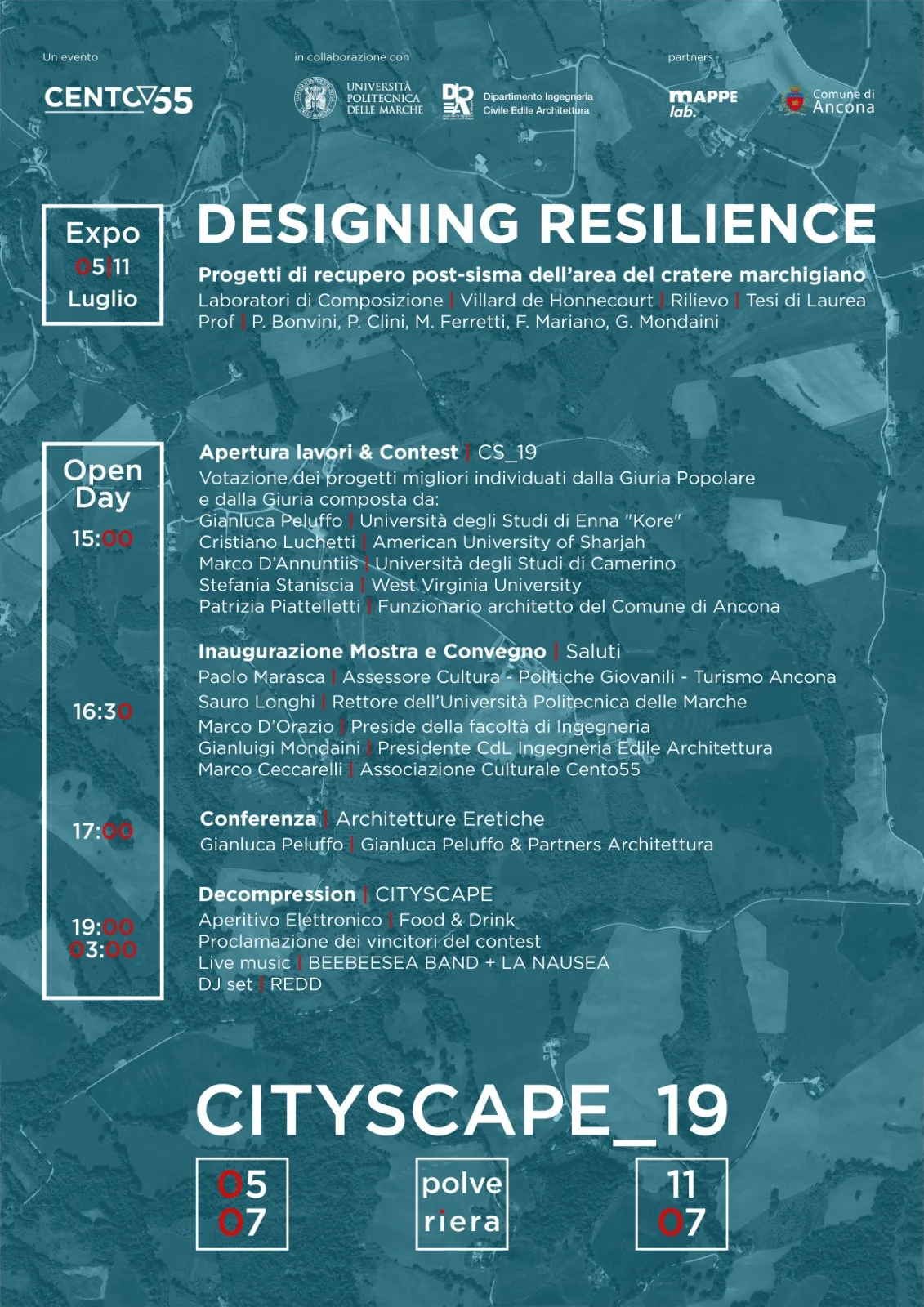
Cristiano Luchetti is among the jurors for the CITYSCAPE 2019 July 5, 2019
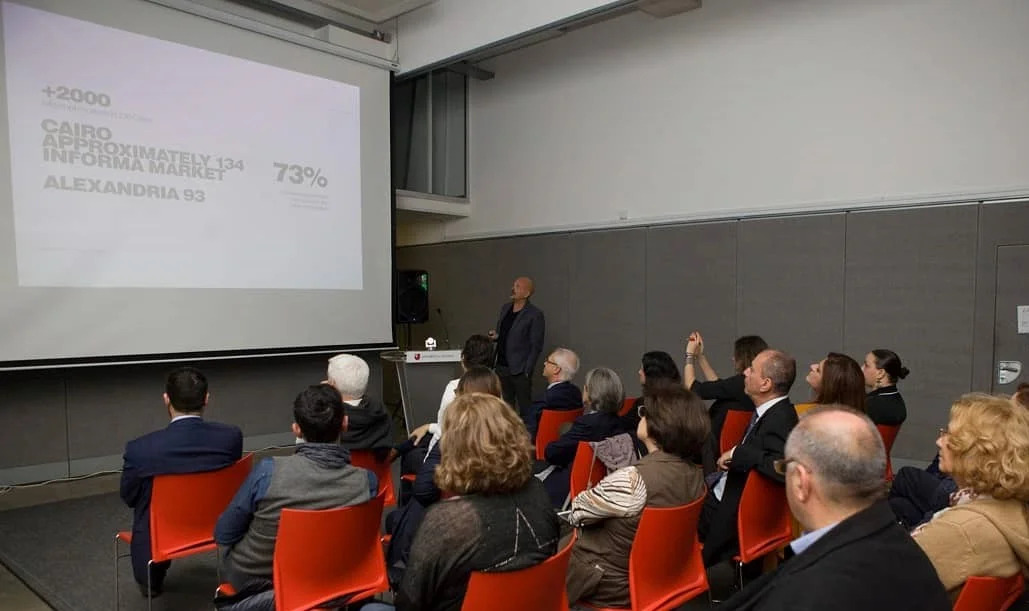
Romano Martini and I are excited to take part in this very interesting conference where we will present the paper: “ARCHITECTURE AS PRACTICAL PHILOSOPHY: THE AESTHETICS OF CONTEMPORARY METROPOLIS”

It was a pleasure and an honour to be invited to present “Robabecciah : The informal City” at the 4th International Conference on “CHANGING CITIES: Spatial, Design, Landscape & Socio-economic Dimensions”, Chania, Crete Island, Greece, 24-29 June 2019.


Cristiano Luchetti is among the jurors for the 2019 edition of Cityscape Awards in Dubai.
The theme for this year’s Cityscape Global is Adapting to Change. This theme is highlighting the ways in which the real estate market is adapting to change in terms of new technology, sustainability and changes within consumer and commercial patterns.

Dubai Walk-In City is published on ANANKE 86


“Architecture is not merely an activity of construction, and metaphors are necessary. The practice of architecture, beyond adequately responding to a functional brief, must promote evocative, stimulating and fascinating spatial solutions. Therefore, architectural metaphors communicate the intangible thinking process behind design ideas.”
ON THE OCCASION OF THE ITALIAN DESIGN DAY 2019 THE EMBASSY OF ITALY HAS PARTNERED WITH THE UNIVERSITY OF NICOSIA AND WITH THE POINT CENTRE FOR CONTEMPORARY ART TO ORGANIZE TWO CONFERENCES FEATURING PROMINENT ITALIAN SPEAKERS: WEDNESDAY 20 MARCH @ 18:00 AT THE DEPARTMENT OF ARCHITECTURE OF THE UNIVERSITY OF NICOSIA
MASSIMO CATALANI AND CRISTIANO LUCHETTI

Muttrah’s fish market has always been more than just a place for trading. It’s a cultural emblem that anchors the northern end of the old town’s corniche in Muscat. A neighbourhood staple of the everyday life of the local community, the vendors roll out what seems to be the entire ocean each morning.
The first time I visited the Muttrah fish market was in 2010, and while observing the movements and faces of the sellers, I realised the historical importance of the place. As vendors laid out the morning catch on counters hoping to attract potential customers, they told stories to one another – it was a scene I felt would one day become a part of history as there were no young people within sight. Was this to be the last generation keeping the Muttrah fish market alive? Would the market soon disappear, remembered via a nice memorial plate placed at the end of the path along the corniche? Luckily not…..
In 1977 Peter Blake wrote “Forms follows fiasco: Why modern architecture does not work”. His skepticism towards the dominant architectural thinking of the twentieth century was expressed through a series of chapters in which he cynically commented on the dominant themes of “modern” architectural research. In the chapter “The fantasy of the open plan”, the main topic is the functional flexibility……..


What does it mean to be an outsider? For one, the word refers to a person who does not belong to any specific group, and it’s often associated with someone not likely considered to win or succeed. It has negative connotations – to be an outsider is to be an outcast in some way. But what happens when the outsider does succeed? Do they become a central standard that has magnetic pull? Does it become a positive term?
Last year was my third time as member of the jury for the Middle East Architect Awards, Luchetti writes.
This event is indicative of the state of the art in urban design, current trends, and achievements in the region, so projects and architects’ profiles submitted are disciplinarily interesting for a scholar like me. In 2015, I witnessed a lack of projects that one could define as “iconic”. It seemed that the architectural language of the submissions was adapting more and more to the economic conditions of these ambiguous times and avoiding unnecessary risks. In 2016 I noticed an even further drift toward safer and familiar languages.
In a sort of a reversed-brutalist process the language expressed through Euclidean geometries and rational architectural composition of spatial layouts gets polished and beautified through the use of the latest fashionable materials and high-tech building components. It seems that if space still remains within the boundaries of accustomed typologies, its finishing, performance, and detailing acquire more value…

Tributes have been paid to Zaha Hadid from across the world, following her recent untimely death. Here Cristiano Luchetti Assistant Professor, College of Architecture, Art and Design at the American University of Sharjah offers his personal thoughts on her legacy.
Cristiano Luchetti is Assistant Professor, College of Architecture, Art and Design, American University of Sharjah. Here he writes a personal piece exploring how the emphasis on projects in the region is changing.
